

1. Introduction
olive leaf extract Novel Food, Olive leaf extract (OLE), derived from Olea europaea L., has gained significant attention in the nutraceutical and functional food sectors due to its rich polyphenol content, particularly oleuropein and hydroxytyrosol. However, its regulatory status within the European Union remains a critical compliance issue for manufacturers and distributors. This article examines OLE’s current standing under EU Novel Food Regulation (EU) 2015/2283 and explores future market and regulatory trajectories.
2. olive leaf extract Novel Food Current Regulatory Status: The Novel Food Distinction
The European Commission’s Novel Food Catalogue provides the definitive guidance on whether an ingredient was consumed significantly in the EU before 15 May 1997. For olive-derived products, the distinction is clear and hinges on processing and concentration levels.
Status Summary Table
2.1 The “Concentration” Threshold
As Jerome Le Bloch, Head of Scientific Affairs at FoodChain ID, explained: “While the raw material is a foodstuff, extracts with higher polyphenol concentrations are considered novel food due to a selective purification”. The naturally occurring hydroxytyrosol levels in olives are low; selective extraction and concentration processes that result in levels of 10% or higher fall outside traditional consumption history.
2.2 olive leaf extract Novel Food Key Regulatory Clarifications
In May 2026, the European Commission updated the Novel Food Catalogue to clarify that highly concentrated extracts rich in polyphenols such as hydroxytyrosol and tyrosol are classified as Novel Foods unless specifically authorised. The assessments were conducted by the Spanish Agency for Food Safety and Nutrition (AESAN) for hydroxytyrosol-rich extracts and by the Greek competent authority for olive polyphenols. Olive leaf extract novel food status, which lead us to be serious on our botanic source.
Key Considerations for Industry
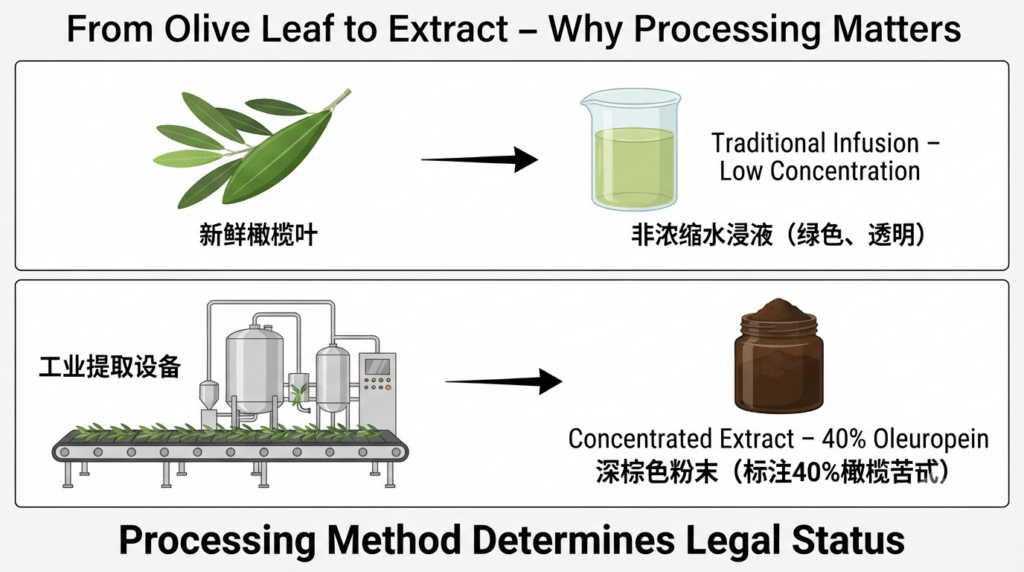
- Standardisation Matters: Products standardised to 6% oleuropein are commercially available and labelled as “EU Compliant”, though careful verification of Novel Food status is essential. RDHealthIngredients can offer Olive leaf extract with 5-6% Oleuropein water extraction.
- Health Claims: EFSA has assessed health claims for olive leaf water extract and glucose tolerance, but evidence was deemed insufficient. Any future claims require robust scientific substantiation.
- Supply Chain: China can offer all kinds of olive leaf extract, olive leaf powder, Olive leaf extract novel food status.
Are you looking for certified origin, traceability or safety? We propose a full range of titrated herbal extract in accordance with GB, USP, EP, Pls find the list here. If not listed, please get contact with us at sales06@health-ingredients.com. Or you can search them by A-Z Product List.